The energy the sun
leaves in the dark.
Ikaria develops a wind turbine that changes shape with the wind, designed to complement solar panels in the hours when the sun isn't producing (evening, night, winter). Not an alternative to solar: its natural complement.
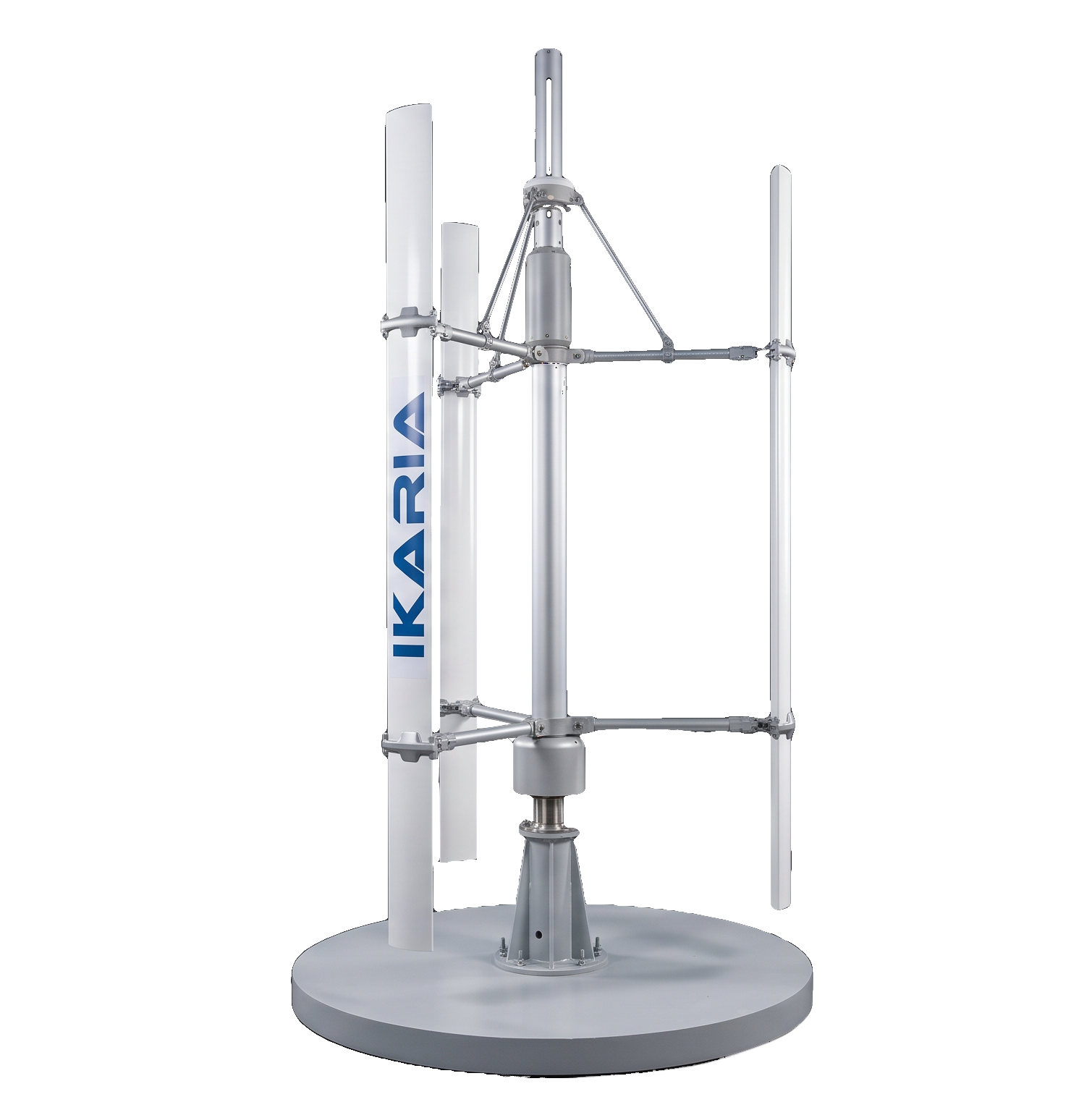
A turbine that adapts to the wind, not the other way around
The blades adjust their own opening based on wind intensity, through a variable-geometry mechanism controlled in real time. The result is a compact turbine, able to operate safely across a wide range of wind conditions.
The technology is patented and protected at European level. We work with university research centers to validate its performance and structural safety.
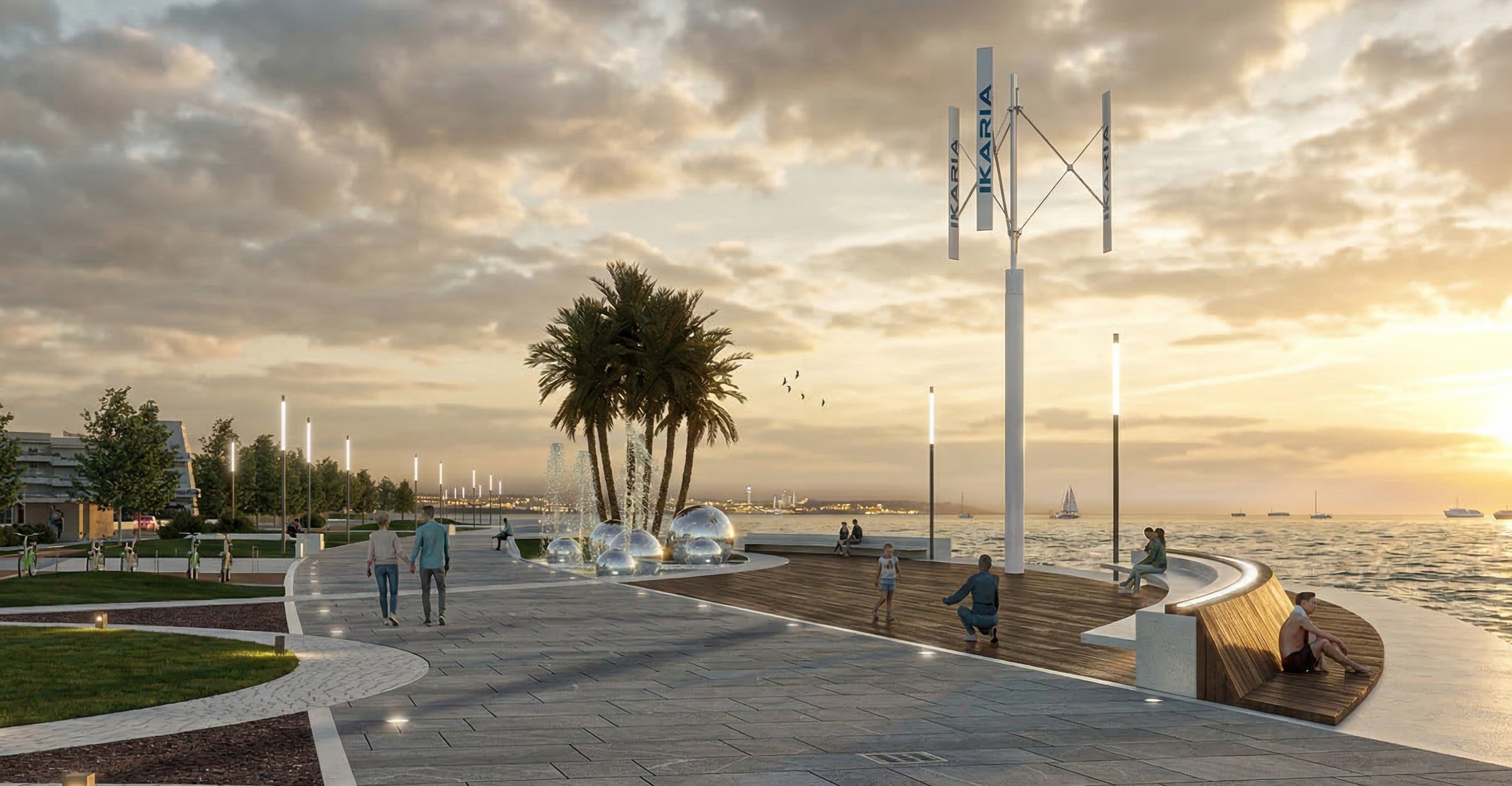
Not an alternative to solar. Its natural complement
Wind and sun largely follow uncorrelated cycles: wind is often more present in the evening, at night and in winter months (precisely when solar produces less). Combining the two sources reduces uncovered hours and the need for storage.
Click on a country to see how many square meters of equivalent solar would be needed, in the same area, to match the energy density of 1 m² of Ikaria wind technology.
Batteries shift energy in time. Wind generates new energy when you need it
A home battery doesn't produce energy: it stores it, charged by solar panels during the day, to give it back later. But electricity has an inconvenient trait: it wants to be consumed the moment it's produced. Every time it's stored and drawn back out instead, that step has a cost (the so-called LCOS, levelized cost of storage) and a round-trip efficiency loss. If evening and overnight consumption grows (the most common case is charging an electric vehicle, which adds to the home's demand), the battery drains faster and needs to be sized larger to cover the same need, at a higher cost and bigger losses. Wind, in the hours when it blows, generates new energy exactly in that window (evening, night, winter): it arrives already at the moment it's needed, without first passing through storage.
The battery stores, at a cost
It shifts in time the energy already produced by solar, but every charge and discharge cycle has a cost and an efficiency loss. The more load you shift to the evening, the more capacity (and losses) you need to cover it.
Wind generates when needed
It produces new energy exactly in the hours when solar is idle: it arrives already at the moment of need, without the cost and losses of a storage step.
EVs add demand
Those switching to electric typically charge at home, in the evening or overnight: exactly the hours when solar isn't producing and the battery is draining.
More turbines, the same solar roof
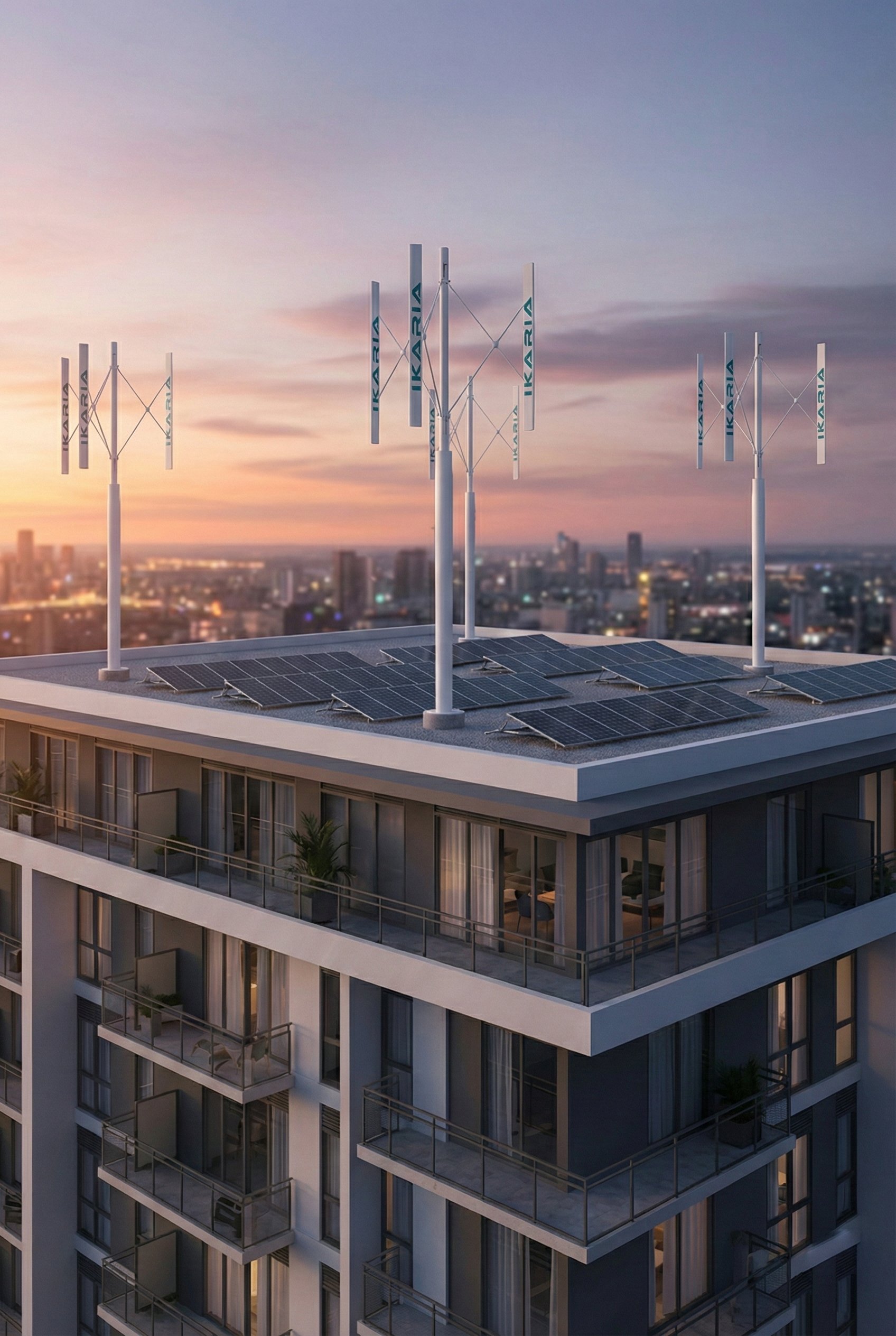
On an apartment building or a property with an existing solar installation, multiple Ikaria units can sit alongside the panels without competing for the same space: solar covers the sunlight hours, wind the hours when the sun isn't enough. The energy produced by both can be virtually shared among residents through collective self-consumption or a Renewable Energy Community scheme.
We're looking for a pilot building, together with an installer or an ESCo partner, to validate this model. Propose a pilot building →
Technical rigor, not promises
Patented technology
The variable-geometry mechanism is protected by a European patent, extended to 17 countries.
Research partnerships
The project is developed in dialogue with university research centers, to validate aerodynamics, control and structural resistance.
Italian innovative startup
Ikaria S.r.l. is based in Abruzzo (Italy), where it develops and tests its prototypes, working with a network of local manufacturers.
The latest updates from LinkedIn
We regularly post technical progress, partnerships and milestones on the Ikaria journey.
Register your interest
We're validating with our first partners and pilot sites. If you're an installer, an ESCo, an energy consultant, or you have a site you'd like evaluated, tell us about it: we'll get back to you.